Showing posts with label USA. Show all posts

Wednesday, April 02, 2014

The West’s Looting of Ukraine Has Begun

by PAUL CRAIG ROBERTS
It is now apparent that the “Maiden protests” in Kiev were in actuality a Washington organized coup against the elected democratic government. The purpose of the coup is to put NATO military bases on Ukraine’s border with Russia and to impose an IMF austerity program that serves as cover for Western financial interests to loot the country.  The sincere idealistic protesters who took to the streets without being paid were the gullible dupes of the plot to destroy their country.
Politically Ukraine is an untenable aggregation of Ukrainian and Russian territory, because traditional Russian territories were stuck into the borders of the Ukraine Soviet Republic by Lenin and Khrushchev. The Crimea, stuck into Ukraine by Khrushchev, has already departed and rejoined Russia. Unless some autonomy is granted to them, Russian areas in eastern and southern Ukraine might also depart and return to Russia. If the animosity displayed toward the Russian speaking population by the stooge government in Kiev continues, more defections to Russia are likely.
The Washington-imposed coup faces other possible difficulties from what seems to be a growing conflict between the well-organized Right Sector and the Washington-imposed stooges.  If armed conflict between these two groups were to occur, Washington might conclude that it needs to send help to its stooges.  The appearance of US/NATO troops in Ukraine would create pressure on Putin to occupy the remaining Russian speaking parts of Ukraine.
Before the political and geographical issues are settled, the Western looting of Ukraine has already begun. The Western media, doesn’t tell any more truth about IMF “rescue packages” than it does about anything else. The media reports, and many Ukrainians believe, that the IMF is going to rescue Ukraine financially by giving the country billions of dollars.
Ukraine will never see one dollar of the IMF money. What the IMF is going to do is to substitute Ukrainian indebtedness to the IMF for Ukrainian indebtedness to Western banks.  The IMF will hand over the money to the Western banks, and the Western banks will reduce Ukraine’s indebtedness by the amount of IMF money.  Instead of being indebted to the banks, Ukraine will now be indebted to the IMF.
Now the looting can begin.  The IMF loan brings new conditions and imposes austerity on the Ukrainian people so that the Ukraine government can gather up the money with which to repay the IMF.  The IMF conditions that will be imposed on the struggling Ukraine population will consist of severe reductions in old-age pensions, in government services, in government employment, and in subsidies for basic consumer purchases such as natural gas. Already low living standards will plummet.  In addition, Ukrainian public assets and Ukrainian owned private industries will have to be sold off to Western purchasers.
Additionally, Ukraine will have to float its currency.  In a futile effort to protect its currency’s value from being driven very low (and consequently import prices very high) by speculators ganging up on the currency and short-selling it, Ukraine will borrow more money with which to support its currency in the foreign exchange market. Of course, the currency speculators will end up with the borrowed money, leaving Ukraine much deeper in debt than currently.
The corruption involved is legendary, so the direct result of the gullible Maiden protesters will be lower Ukrainian living standards, more corruption, loss of sovereignty over the country’s economic policy, and the transfer of Ukrainian public and private property to Western interests.
If Ukraine also falls into NATO’s clutches, Ukraine will also find itself in a military alliance against Russia and find itself targeted by Russian missiles.  This will be a tragedy for Ukraine and Russia as Ukrainians have relatives in Russia and Russians have relatives in Ukraine. The two countries have essentially been one for 200 years.  To have them torn apart by Western looting and Washington’s drive for world hegemony is a terrible shame and a great crime.
The gullible dupes who participated in the orchestrated Maiden protests will rue it for the rest of their lives.
When the protests began, I described what the consequences would be and said that I would explain the looting process.  It is not necessary for me to do so. Professor Michel Chossudovsky has explained the IMF looting process along with much history here.
One final word.  Despite unequivocal evidence of one country after another being looted by the West, governments of indebted countries continue to sign up for IMF programs.
Why do governments of countries continue to agree to the foreign looting of their populations?  The only answer is that they are paid.  The corruption that is descending upon Ukraine will make the former regime look honest.

Tuesday, March 19, 2013

¿Por qué Capriles cogió hacia el Táchira, Mérida y el Zulia?


No es casualidad que Capriles haya estado en Estados Unidos los días previos al fallecimiento del Comandante Chávez, pero el Departamento de Estado es todo un misterio que apenas muestra sólo a sus seguidores una parte de los grandes planes que tiene para Venezuela. Mientras ofrece dinero a Capriles para que juegue “limpiamente” en la campaña electoral, simultáneamente apuesta a lo que mejor sabe hacer: a crear un estado de terror y caos en la población venezolana para luego poder utilizar las fuerzas “persuasivas” de sus portaaviones, pertinaces restuaradores de “democracia” en nuestro continente.

Si eliminar a Capriles contribuye a esa restauración, bien vale la bala que se le aloje en el cerebro. Esa sería para ellos la contribución más barata que podría hacerle este Majunche al imperio que tanto ha hecho por su clase social desde hace un siglo.
Alguien de peso tiene que sacrificarse.

Ahora bien, Capriles también recibió un conteiner de billetes por la frontera con Colombia,
y a eso ha ido este fin de semana pasada, a constatar esa entrega y a contabilizar los pagos que deben hacerse; inició su campaña, pulseando en los territorios que reciben más plata del narcotráfico uribista, asociados a los gringos. La penetración de los paramilitares en el Táchira es de pánico. Allí hay todo un territorio fuertemente controlado por la ultra-derecha, principalmente por los fachos que hacen vida en el Núcleo de la Universidad de Los Andes todos ellos vagos del Movimiento 13 que tienen fuertes vínculos con los más vomitivos malandros de Mérida y del Núcleo de Trujillo.

Capriles está haciendo lo imposible por tratar de revivir a los perversos enlaces con los huelgueros de hambre, con los cosedores de belfos que son empedernidos seguidores de la doctrina Nixon, El Violador.

Pero por otro lado, podemos decir que al menos las vagabuderías de los hijos de Nixon están casi extinguidas en Mérida. La mamaderita de gallo de la ultra cavernosa Gabi Arellano y el malandro Vilca Fernández, consumados y consuetudinarios vagos de la ULA, fue parada en seco por el gobernador Alexis Ramírez. Aquí en Mérida esta gente no volverá a perturbar a los pacíficos ciudadanos como lo venía haciendo desde hace doce años.

Pero no obstante estas fuerzas terroristas están haciéndole un reconocimiento al terreno, para coordinar acciones con el opudeista Lester Rodríguez y el ultra-cabeza rapada, ultra fascista rector de la ULA, Mario Bonucci. El sábado pasado se trajeron varios autobuses de la ULA lleno de mocosos burgueses de San Cristóbal para la concentración de Capriles en Mérida. Pero aquí se le hizo seguimiento a todo. Capriles en una reunión privada le reclamó tanto a Bonucci como a Lester, el que en modo alguno se estuviera justificando los 700 mil dólares que se les entregó hace un mes para provocar acciones de calle. Estas misma reprimendas fueron lanzadas a los fachos de LUZ que han estado apagados desde hace meses. Por el Zulia está ingresando otro camión de plata para estos malandros y hay que meterle mucho el ojo señor gobernador Francisco Arias Cárdenas.

La semana siguiente después de Semana Santa, se esperan acciones muy violentas en Táchira, Mérida, Trujillo, Maracaibo y Caracas. Las acciones estarán dirigidas contra el CNE, que en principios fueron las acordadas por el Departamento de Estado, como básicas para crear un ambiente de inseguridad electoral y jurídica en el país. Pero la ultra-derecha gringa mantiene en su agenda la posible eliminación del Majunche, porque considera que este hecho le daría mejores frutos: volarían por los aires los planes electorales del 14 de abril y Maduro entonces no podría asumir la Presidencia.

Debemos mantenernos muy alertas con respecto a estos planes porque no olvidemos que coinciden con los planes aplicado por Santander para destruir la Gran Colombia, cuando en 1828 se retiraron de la Convención de Ocaña, dejando sin lenguaje constitucional a la república y obligando al Libertador a asumir la dictadura.
La derecha no se cruzará de brazos y nosotros tenemos que ser cada vez más agudos en contra-inteligencia, a las vez que radicales y muy contundentes.
Ojo avizor, camaradas.


jsantroz@gmail.com

Wednesday, February 20, 2013

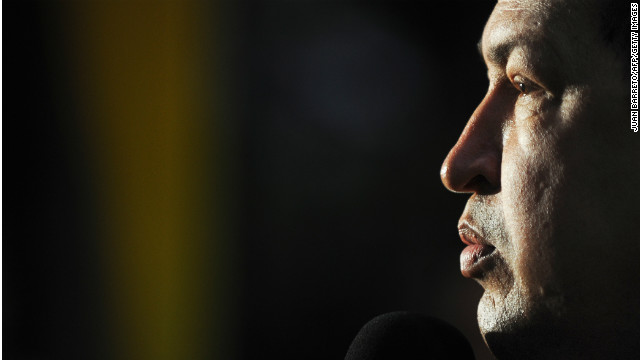
Isn't it time to respect Venezuela's democracy?


By Samuel Moncada, Special to CNN
February 18, 2013 -- Updated 1218 GMT (2018 HKT)


Over the past decade, all sorts of predictions have been made, ranging from catastrophic election defeats to the implosion of the Venezuelan economy. But the fact these predictions have failed to materialize has not deterred many of Venezuela's most fervent critics in their quest to engineer a constant and misleading narrative of impending disaster.

The reality is that ever since President Hugo Chavez was first elected, Venezuela has defied these negative predictions and brought unprecedented social progress to the country over the last 14 years. Since 2004 poverty has been reduced by half andextreme poverty has been cut by 70%. University enrolment has doubled, entitlement to public pensions has tripled, and access to health care and all levels of education have been dramatically expanded.

Venezuela now has the lowest levels of economic inequality of any Latin American country as measured by the Gini coefficient. Our country has already achieved many of the Millennium Development Goals, and is well on target to achieve all eight by the 2015 deadline.

This progress has been achieved by using Venezuela's vast oil revenues to transform the lives of ordinary people. The sheer scale of our oil reserves -- the world's largest -- guarantees the complete sustainability of the model in which the country's resources are used to stimulate growth in the economy and aid development.

But Chavez's most significant achievement has been to trigger the awakening and empowerment of the majority. A majority of Venezuelans have seen vast improvements in their living standards and, as a consequence, they have continued to defend their interests at the ballot box.

The Venezuelan people are very clear about what they want.President Chavez was re-elected in October 2012 with 54% of the vote in an election that boasted an 81% turnout. The Venezuelan people showed their support for the government again in December 2012 in the gubernatorial elections, which saw Chavez's political party win 20 out of 23 states.
Governments in Europe and other parts of the world could only dream of these levels of support after 14 years in power. This shows that social progress in Venezuela has been consolidated and that there is a desire to further expand this progress.

In the coming years, the Venezuelan government will continue to respond to the needs of the Venezuelan people. Hundreds of thousands of new homes have been built over the last two years which have not only greatly improved living standards but also provided jobs and contributed to a boom in the construction industry. The government is well on its way to meeting its target of building three million new homes by 2019.

While many economies around the world are shrinking, theVenezuelan economy grew by 5.5% in 2012. Against the backdrop of a continuing international financial crisis, commerce in Venezuela grew by 9.2% and communications by 7.2%, manufacturing grew by 2.1% and the oil sector grew by 1.4% -- making Venezuela one of the fastest growing economies in Latin America.

At a time when many countries are attacking the rights of the most vulnerable sectors of society, Venezuela is providing ever greater protection for low-income senior citizens and single-parent families with younger children or disabled dependents.

The failed development models of previous governments condemned millions of Venezuelans to poverty. Before the election of Chavez in 1998, Venezuela suffered years of falling GDP. The country had one of the worst economic records in the world -- a record that led to mass social unrest and violent military crackdowns.
Venezuela will continue on its path of social progress and empowering ordinary citizens. The greatest hope for the future is the people know that they alone hold the power to determine the direction the country will take.
After so many failed predictions, isn't it time to respect Venezuela's democracy and the will of the people?


Tuesday, February 19, 2013

A Democratic Display in the Center of the World


Rafael Correa, An Anti-Obama in Ecuador?

by ADAM CHIMIENTI AND CARMEN L. ARIAS
Latin American elections always seem to get it these days. Western journalists cannot deny an opportunity to pass without throwing some stones. So it was hardly surprising when the words “dictator”(Reuters, BBC) and “handouts”(USA Today, CBS News) were thrown into the hastily assembled reports on the election in “tiny”, read: insignificant,[i] Ecuador and the results turned out to be heavily in favor of the “anti-American” candidate.
It’s interesting to look at each of these terms to see the duplicitous nature of Western reporting. For example, the word dictator should hardly apply to Rafael Correa, the Ecuadorian President comfortably reelected. That is unless you enjoy the use of hyperbole for dramatic effect. As they say, if it bleeds… and Latin American blood is always especially crimson in the grey of the New York Times and its counterparts. Except President Correa in Ecuador has killed no one. He has started zero wars, tortured or killed zero citizens, and while he may have a “pugnacious” (Reuters again) attitude how else could one realistically expect a politician to survive in the 21st century.
Here’s what you need to know. Rafael Correa was a nobody on the political scene in Ecuador when George W. Bush was being inaugurated for the second time in Washington 8 years ago. I know. It’s not polite to bring up such ugly episodes in US history but allow me to refresh your memory for a second. Bush just beat the current Secretary of State John Kerry in the November election and presumed he had a mandate. He was talking about going after Social Security. The left, right and center were paying close attention. It turns out though, that Bush’s victory was an incredibly narrow one, with allegations of strange occurrences in Ohio, people being forced to wait in line for hours around the country and corporations spending ever more on getting their representatives elected.[ii] All in all, the result was a US democracy looking less and less like an established fact, and more and more like some kind of disturbing case of regression back into the “good old days” of black, brown, poor, and those with some form of exploitable vulnerability being prevented from voting because they were black, brown, poor or vulnerable. No matter though. Both Kerry and Bush were rather familiar politicians, both extremely wealthy, both went to Yale and both even played in the same dark dungeons there.[iii] How nice!
Meanwhile, Rafael Correa was a nobody on the Ecuadorian political scene back then. Journalists would have found no reason to write about him, negatively or otherwise. Then, the Ecuadorian people had grown tired of dirty politics and politicians once and for all it seemed. Various social groups came together including natives from the highlands and lowlands and leftists who were inspired by Chavez in Venezuela, Lula in Brazil, Kirchner in Argentina, and Morales in Bolivia. They decided to throw out a president they called Sucio (Dirty) Lucio. Lucio Gutierrez was an alright guy in their eyes back in the year 2000 when he was in military fatigues and had decided to lend his hand to the social movements that were stirred up by a terrible economic crisis that featured dollarization of the economy. If you live in the US and wondered what happened to all your dirty old dollar bills, then dollarization could help you understand.
In 1999, the country was told by economists from the US and those benevolent monetary institutions, the IMF and World Bank, that its sucre currency was especially filthy lucre and needed to be thrown out. In turn, they could start using the US dollar and be happier for it. One problem though was that anyone with any small amount of savings in the bank were practically wiped out. So along came Sucio Lucio with some supporters behind him, ready to say ¡Ya Basta! but it turned out that he was only playing nice. Actually, Sucio Lucio was destined for bigger and better things than low or highland “Indians”. He had a date with George W. from Yale. How exciting!
Eventually, the people of Ecuador were stirred up once again and decided to take to the streets one more time. The legislature would have to take decisive action. The rest, as they say, is history. Lucio Gutierrez would be removed from office, albeit in a very civilized way, and his vice President Alfredo Palacio would take over. The man who would temporarily be in charge of the government in Quito was a medical doctor by trade. He would reportedly told BBC Journalist Greg Palast, our former boss, that if the IMF really made the Andean country pay the debt they said Ecuador owed, then they would not survive. This story isn’t about him though. It’s about the colorful and confident, if not pugnacious, finance minister he chose for a brief stint in 2005. This man subscribed to the views of Ha Joon Chang and other heterodox economists who pointed out that the West was “kicking away the ladder” when it came to advice on how to run an economy. His name was Rafael Correa!
Correa would then go on to run for president himself and surprise everyone by whipping the ever-persistent banana magnate and #1 wealthiest man in the country. Alvaro Noboa is the man behind Bonita bananas and he believed Ecuador should proudly continue in the path of the banana republicanism that it was known for. He felt so strongly about this that he was to run for president five times and not be deterred by his lack of success.[iv] Correa disagreed and so did the Ecuadorian people. The West was, wait for it now, flabbergasted. How could this be? Oh, that’s right! It was because Latin Americans like to elect populists who in turn like to screw up economies, and then who like to head for Miami or Zurich or some other safe haven. So the story goes.
Correa was not your typical populist in the sense that he actually knew a bit about what he was doing. He had studied in the US but he didn’t leave with tears in eyes, saying he’ll never forget those wonderful Yankees. He came back home like many Ecuadorians would love to do, and he did so with a plan. [Note: the country’s economy has been tragically dependent on remissions, with Ecuadorian migrants propping up the likes of Western Union and filling the squares of Madrid, Rome and other European cities on Sunday to celebrate their only day off.]
Correa’s plan was to save the economy of Ecuador by putting into place the economic programs so rarely enacted but superior in every way to the IMF Structural Adjustment Plans (SAPs) that economists love to talk about. There would be no more borrowing to pay off loans. There would be no more privatizing to place premiums on necessities such as water, electricity, gas and oil. Correa would reverse course and, six years later, Ecuador is celebrating their democracy with pride. While I do not wish to be overzealous and depict a knight in shining armour, most of the people are very happy with their president. They respect him and they even care about politics with him at the helm. This includes young and the old, the poor and the middle class, the black, brown and white.
I know. You’re thinking I’ve heard all this before. Obama was standing in DC reciting his passionate inaugural speech only weeks ago. Tears, though not as many as in 2008, were flowing and Obama supporters were saying it was time to get busy. Electoral politics is a sham but let’s give the Ecuadorian people and the government some credit here. The election appeared well-organized and peaceful. The winner was an incumbent with a plan to continue to try to revitalize the economy by giving ordinary everyday people a chance at living a life devoid of the desperation that comes with deep impoverishment. They are investing in social programs like healthcare, education, grassroots cooperatives, and even trying to mitigate serious environmental problems. In an article in The Guardian, the Indian economist Jayati Ghosh has called Ecuador the most radical and exciting place on earth as a result.[v]
Since Correa first took office in early 2007, he got a lot of interesting things done. He defaulted on Ecuador’s debt (that his predecessor swore would be the death of the country).[vi] He kept his campaign promise to evict the United States military from their base at Manta. He set about correcting some serious problems with the constitution by leading a team to draft a new one. This new constitution would be the first to provide rights to the environment, that is, rivers, lakes, and forests in Ecuador have rights and can be legally defended. He also sponsored a plan to keep the oil in the soil with the Yasuni Initiative, a plan to attract investors whose funds would be used to not extract oil.[vii] The plan and the constitution were hailed as trailblazing. Imagine all that from a dimunitive nation like Ecuador. He also declared solidarity with the plaintiffs in the Amazon against a shameless US corporation[viii] (Shell, now Chevron), whose refusal to act with minimal responsibility when drilling for oil and to clean up after itself has led to serious problems with the land and its inhabitants.[ix] He even invited Julian Assange to come down and live, so he could be sheltered from those countries (Sweden, Australia, the US) willing to destroy liberties to avoid the frightening idea of the free flow of information.
This is not to say that all is rosy. There are plenty of problems that must be dealt with. As in Venezuela and the United States, crime is a serious problem. People are worried about the executive branch having too much power. Mining in the country is deemed necessary by the government but the people that live in areas that will be affected need to have a seat at the table. Furthermore, Correa’s style can offend. His former ally, Alberto Acosta, broke with him because he feared that the president’s ego and quest for power was becoming too much. The progressive constitution the country’s assembly had written was being manipulated by the president in a quest to maintain and increase his power. He was backing down on some of the promises he made about the environment and was increasingly intolerant of dissent. Acosta was challenging him from the left and we can hope that the pressure he applies will keep the president in check and even set agendas like third parties should be able to do. Acosta, who called Correa “the sun-king of the 21st century” claiming that he controls everything,[x] appeared not to have a significant following in the election with only 3.4% of the vote, less than the banana magnate Noboa and Sucio Lucio Gutierrez (yes, both really did run again). His main competition, Lasso with around 22.5% of the vote, was a banker and it was really no contest at all.
It does seem that Correa has broken a lot less promises than President Obama. It also appears that he is probably not going to lock up whistleblowers, kill his own citizens, make a mockery of the citizens’ increasingly undermined civil liberties invade countries for “humanitarian purposes” like Bush and Obama have done. Rather, it seems like he is willing to stand up and count when it matters, like when an oil company poisons a significant portion of the country (BP flavored shrimp anyone?) or when bankers try to get their way by ruthlessly insisting that austerity simply must be carried out. There is an alternative and there shall always be one. Promises should be kept sometimes at least. ¡Viva la revolucion ciudadana in Ecuador and everywhere!
Adam Chimienti is a teacher and a doctoral student originally from New York. He can be reached at ajchimienti@gmail.com. Carmen L. Arias can be reached at karmenarias@gmail.com
Notes
[i] The Washington Post and Daily Mail, amongst others, recently used the adjective tiny, to describe Ecuador, roughly the size of Nevada.
[ii] For a summary of these problems that for the most part have yet to remedied see http://www.nytimes.com/2004/12/24/national/24vote.html
[iii] Remember Skull and Bones: see this 60 Minutes “Skull and Bones,” http://www.cbsnews.com/8301-18560_162-576332.html
[iv] Alvaro Noboa likes to fashion himself as a philantropist http://www.alvaronoboa.org/2011/03/alvaro-noboa-helping-hand.html but critics contend that he uses the social funds for political purposes when running for office according to his Wikipedia page http://en.wikipedia.org/wiki/%C3%81lvaro_Noboa#cite_note-9. Human Rights Watch has cited him for widespread abuse of labor and for child labor. See http://www.hrw.org/en/news/2002/04/24/ecuador-widespread-labor-abuse-banana-plantations
[v] Jayati Ghosh. “Could Ecuador be the most radical and exciting place on earth?” The Guardian 19 January 2012 online at http://www.guardian.co.uk/commentisfree/cifamerica/2012/jan/19/ecuador-radical-exciting-place, accessed 18 June 2012.
[vi] For more on the default and the reasoning behind it see Neil Watkins and Sarah Anders. “Ecuador’s Debt Default,” Foreign Policy in Focus December 15, 2008 at http://www.ipsdc.org/articles/ecuadors_debt_default_exposing_a_gap_in_the_global_financial_architecture accessed online on 18 May 2012 and an article titled “Ecuador declares foreign debt illegitimate,” published as an entry in the series Project Censored. Accessed online at http://www.projectcensored.org/top-stories/articles/10-ecuador-declares-foreign-debt-illegitimate/
[vii] John Vidal. “Can Oil Save the Rainforest?” 19 January 2013, http://www.guardian.co.uk/environment/2013/jan/20/can-oil-save-the-rainforest, accessed 19 January 2013.
[viii] According to a transcript from an interview with Amy Goodman on Democracy Now! on 29 June 2009, http://www.democracynow.org/2009/6/29/ecuadoran_president_rafael_correa_on_global, accessed on 21 September 2012.
[ix] William Langeweische. “Jungle Law,” Vanity Fair May 2007, http://www.vanityfair.com/politics/features/2007/05/texaco200705, accessed 1 October 2012.
[x] See BBC News Election coverage http://www.bbc.co.uk/news/world-latin-america-21379601

Saturday, February 09, 2013

Israel in Syria


It is abundantly clear that Israel has been involved in every Arab (and several non-Arab) civil and inter-state wars over the decades. There is hardly a civil war in which Israel was not criminally involved on the side of the most reactionary party. From Yemen to Lebanon, Jordan, Sudan, Western Sahara, Oman and Iraq, Israel has consistently involved itself – usually on the side of a repressive regime, or a repressive army or militia. Israel has been involved in the affairs of Lebanon since the 1950s, at least.
Israel has also been involved in Syrian affairs for decades. The story of Elie Cohen has been told too many times, and the failure of Cohen – it is rarely mentioned in the Western heroic portrayal of him that he was after all caught, which is not the ultimate prize for any spy – has been covered up in all those pro-Israeli movies and books. Cohen basically opened a brothel in Damascus on behalf of the Mossad, and hoped that drunken officers and low-level government clerks would open up late into the night. It has never been established that Cohen really obtained crucial secrets as was claimed. And Arab enemies of Amin Hafiz [leader of the 1963 coup that brought the Baath party to power in Syria and subsequent president] and Israeli propagandists both promoted the false story about links between Hafiz and Cohen.
Israel, of course, regards the eruption of civil war in any Arab country as a golden opportunity to enter the scene, usually with the assistance of one of the two sides of the conflict. Syria has not been as safe as Lebanon has been for Israeli espionage, but this may soon change. There are already Western media reports about the arrival of Mossad terrorists in Syria, through the entrances that are run by Turkey and their client, the Free Syrian Army. The Syrian Muslim Brotherhood has had direct and indirect relations with Israel for years. They have been allies of the Jordanian King Hussein (by his own admission in a famous televised speech that Hafez al-Assad compelled him to make) and of the pro-Israeli right-wing militias in Lebanon during the civil war. Israeli weapons reached the Muslim Brotherhood militias through the Phalanges in the late 1970s and early 1980s.
It is too early to write about the Israeli role in the Syrian conflict but American officials – for purely domestic reasons – are quite transparent that Israel is consulted on every Western decision concerning Syria. In fact, the Israeli factor may be behind the American preference for the preservation of the Syrian regime, but without Bashar al-Assad. Israel remains unclear whether it wants a change of regime or not, although the proliferation of radical Islamist groups in Syria may have made Israel nervous, and Israel may have pressured the US to abstain from delivering shipments of arms to Syria. Israel, however, may be supporting certain elements of the armed opposition groups in order to gain a foothold among them.
The recent Israeli attack on Syria is not its first, and it came on the heels of the Israeli bombings of Sudan, and Gaza and the West Bank in Palestine. The objective of the Israeli bombing is not clear and the Syrian regime is typically circumspect about the Israeli target or targets. The Syrian regime typically resorted to its language about waiting to pinpoint the “time and place” of Syria and said – yet again – that it reserves the right to respond to Israeli aggression. There was little condemnation from the side of the exile Syrian opposition, despite whispered mumblings here and there and some effortful words by a few individuals who claimed that they are not happy about the Israeli bombing (the lip service that the Syrian March 14 movement pays to the cause of enmity towards Israel is a replica of the Lebanese March 14 version).
And the Syrian regime, despite its pathetic lack of a response to past acts of Israeli aggression against Syria, is now in a more difficult position. If it does not act in response to Israeli aggression, it will be quite embarrassing for the regime to justify the use of fighter jets and helicopter gunships in its internal conflict (for purposes of regime preservation), but not for defending Syrian territory against Israeli attacks. The Syrian army, which has by and large remained loyal to the regime, could face major defections in protest against this regime reluctance. But if the regime responds to Israeli attacks, Israel can inflict severe damage to the military power of the regime which is needed to protect the regime. Either way, the regime could suffer, although it would change the contours of the conflict if it were to respond against Israel in a major way.
Israel must be nervous as the earth all around it shakes vigorously. The region today is quite different from the quiet environment that Israel has been accustomed to since the US and Sadat removed the Egyptian army from the Arab-Israeli conflict. But the changes in the region are not complete and the earth will continue to shake until some form of political or maybe revolutionary transformation takes shape. It is not easy to predict the final outcome, but it is possible to predict that the region will increasingly look unsafe for Israeli occupation and aggression. That in itself is good news.

Tuesday, January 29, 2013

A Boon for Cuban-American Entrepreneurs


The Economics of the Cuban Embargo

by SAUL LANDAU and NELSON P. VALDES
The time has come and almost gone for Washington to repair its broken relations with Cuba. For 53 years the White House has maintained a punishing embargo on trade with Cuba. Its proponents, with the goal of removing Cuba’s revolutionary government, still plead: “give it time.”
In 2001 President George W. Bush allowed for an exception permitting US companies to sell agricultural products to Cuba for immediate payment, although imports from Cuba remained off limits. Other economic sectors received no benefits.
Cuban Americans particularly from south Florida now export goods and remittances to relatives and friends while importing profits from sales made to fellow Cubans in Cuba, giving them an advantage denied to the rest of the country.
Washington pundits attribute superhuman strength to the anti-Castro lobby; thus no President would attempt to lift the trade and travel embargoes on the island. Yet, Cuban Americans trade with and travel to Cuba freely on a daily basis. The “embargo” applies to everyone except Cuban Americans.
This growing international trade, disguised as sending goods to needy family members in Cuba, now includes filling the hulls on 10 or more daily charter flights from US cities to Cuba. Cuban Americans send goods, often with “mules,” to provide family members in Cuba, needing supplies for their businesses. The “mules” return with cash, derived from sales of these goods. Some of the new Cuban stores and restaurants supplied by Miami-based Cubans make substantial profits, some of which get spent in Cuba, and ends up in Cuba’s central bank.
Miami, the United States’ poorest large city, derives income because it provides jobs involved in buying and selling the goods sent to Cuba. Jobs also arise from routine tasks created around the daily charter flights to and from Cuba, and the fees collected from take offs and landings. Add to this, the work for accountants, book-keepers and others.
Some unemployed Cuban Americans get jobs as mules transporting the goods and money from one country to the other. Miami banks also benefit.
In Cuba, this trade also creates jobs and wealth. Mercedes runs a paladar [private restaurant]in Havana’s Vedado neighborhood, “because we draw tourists who like good food, which I serve at my paladar.”
Some paladar customers flew to Havana from Miami. These Cuban Americans come to visit relatives and maybe check on their new investments in Havana family-run businesses. “Relatives in Florida supply me with food I can’t get easily in Cuba,” Mercedes said, “like some spices, and packaged goods. I send them money for these products. They make a profit, and so do I. The government makes money from taxes I pay, and jobs grow in Cuba’s tourist industry.”
US-based charter flights have full hulls, even those with few passengers. One charter flight company manager told us: “Passengers don’t matter that much. The hull is totally full.”
Much of the Cuba trade flows through the Miami International Airport, meaning capital moves from the US to Cuba; most of the luggage contents, however, remain in Cuba. The boon to Miami airport services means jobs, fees and taxes, which remain as capital in south Florida. The goods purchased in south Florida by Cubans (relatives, mules, etc) benefit local businesses.
This trade multiplies jobs throughout the area — as well as it does for Cuba: In Miami sales emanate from stores and lead to jobs in transportation, parking, hotel facilities, restaurants, and luggage-handling. Count the businesses providing services to the people traveling to Cuba and sending goods there. Don’t omit the expanded police force, and extra officials required in immigration, and customs; nor fail to consider jobs servicing air planes, and their jetways, and additional personnel needed for landings and take offs, and extra jobs in airport administration and maintenance created by expanded travel. Think of Miami’s increased tax revenues.
South Florida represents a Cuban settler state within the United States. It counters its interests against those of the dominant society, with the society’s ignorant acquiescence. The Miami-based Cuban Americans and their Cuba-based families have used US-Cuba policy, the embargo representing the power of the nation for their own self-interest, and in order to attain a comparative advantage vis a vis the rest of the American population.
Since 1960, commitment to overthrow of the Cuban government has functioned as US foreign policy on Cuba, a policy now controlled informally by south Florida Cuban-Americans. The Cuban American ethnic enclave assumed the political power needed to turn south Florida into an autonomous Cuban settler state inside US boundaries, so that the embargo does not get applied to the Cuban American enclave. The enclave barons use the embargo to secure, for themselves, a protection of the Cuba trade monopoly.  This challenges stated US national interests.
Camouflaged by ubiquitous anti-Castro rhetoric, the Cuban American entrepreneurs have manufactured a lucrative business with the island, regulated by the very government they pretend to hate. The rightwing congressional representatives pretend to fight for every law to punish the “Castro regime” while in practice turn a dead eye to the growing trade that helps Florida’s and Cuba’s economy. Preserve the embargo, but make an exception for Cuban Americans.
By recognizing the facts about this trade, the White House might become inspired to lift the embargo – a move to benefit all Americans. US government revenue would grow from opening trade and travel with Cuba. In the process we might also regain a missing piece of US sovereignty!
Saul Landau, Professor Emeritus, California State University, Pomona, produced FIDEL and WILL THE REAL TERRORIST PLEASE STAND UP, available on dvd.
Nelson P. Valdes is Professor Emeritus, University of New Mexico.

Wednesday, January 16, 2013

France’s Tragic Path in Mali


by BARRY LANDO
Paris.
With hundreds of French troops in Mali, and hundreds more headed that way, the U.S. among other countries, has also pledged some limited support: intelligence, communication, logistics, unarmed drones. But Washington obviously would like to keep a low profile. Washington, in fact, had been militating against just such a move, fearing that another Western intervention in an Arab land would provide another ideal recruiting target for erstwhile jihadis across the Muslim world, not to mention to provoking a spate of terrorist attacks in Europe.
In fact, though, it turns out that the U.S. has already played a major role in the crisis. It’s a devastating lesson of plans gone awry, another dreary footnote to the law of unintended consequences.
According to an excellent New York Times account, for the past several years, the United States has spent more than half a billion dollars in West Africa to counter the threat of radical Islam, America’s “most ambitious counterterrorism program ever across these vast, turbulent stretches of the Sahara.”
The aim of the program was that, rather than rely on the U.S. and its allies to combat Islamic terrorism in the region, the United States would train African troops to deal with the threat themselves.
To that end, for five years U.S. Special Forces trained Malian troops in a host of vital combat and counterterrorism skills. The outcome was considered by the Pentagon to be exemplary
But all that collapsed as the result of another unintended consequence– of the French-led intervention in Libya. After the fall of Khadhaffi, droves of battle-hardened, well-armed Islamic fighters and Tuareg tribesmen, who had been fighting in Libya, swarmed into Northern Mali.
Joined by other more radical Islamist forces, some linked to Al Qaeda, they had no trouble defeating the Malian army.
Why? Because of the defection to the rebels of several key Malian officers, who had been trained by the Americans.  Turns out that those officers, who were supposed to battle the rebels, were ethnic Tuaregs, the same nomads who were part of the rebellion.
According to the Times, The Tuareg commanders of three of the four Malian units in the north, at the height of the battle, decided to join the insurrection, taking weapons, valuable equipment and their American training with them. They were followed by about 1600 additional army defectors, demolishing the government’s hope of resisting the rebel attack.
In other words, it’s very likely that the French and their allies-to-come in Mali will be battling rebel troops trained by the U.S. Special Forces.
Caught totally by surprise by the whole ghastly mess, the American officials involved with the training program were reportedly flabbergasted.
There are obvious questions: How was it possible for the Special Forces and their Pentagon bosses and the CIA to have had such a total lack of understanding of the Malian officers they’d trained and the country they’d been operating in for over five years? But you could ask that same question about U.S. military actions in any number of countries over the past few decades, from Lebanon to Iraq to Afghanistan, where the most apt  comparison might be to releasing elephants into a porcelain shop.
Which leads to a more fundamental question: how is the U.S. to avoid similar catastrophic mistakes down the road? The Pentagon has recently announced that some 3,000 troops, no longer needed in Afghanistan, have been reassigned to work with the local military in 35 countries across Africa–to deal with the threat of Al Qaeda-linked terrorism.
Sounds just like what was going on in Mali.
But does anyone really think the U.S. and its military will have a better understanding of the myriad forces, tribes, religions, governments, legal and illicit financial interests struggling for power and influence in those countries than it did in Mali?
Or in Iraq, Or Afghanistan or Iran or Somalia or Lebanon, or Vietnam or Cambodia.
And has France now embarked down the same tragic path?
Barry M. Lando, a graduate of Harvard and Columbia University, spent 25 years as an award-winning investigative producer with 60 Minutes. His latest book is “Web of Deceit: The History of Western Complicity in Iraq, from Churchill to Kennedy to George W. Bush.” Lando is currently completing a novel, “The Watchman’s File”, concerning Israel’s most closely guarded secret (it’s not the bomb.) He can be reached through his blog.

Friday, January 11, 2013

El deseo de Año Nuevo de Obama: mantener intacto el statu quo


En medio del teatro montado por la Casa Blanca y el Congreso en torno a las llamadas negociaciones sobre el precipicio fiscal, el Presidente Obama promulgó una serie de leyes que renovaron algunos de los peores excesos de la época de Bush. Estas leyes, que han sido ampliamente excluidas de la cobertura mediática, consolidan aún más políticas detestables como la detención por tiempo indeterminado, las escuchas telefónicas sin órdenes judiciales y la permanencia de la prisión estadounidense en Bahía de Guantánamo. El acuerdo para evitar el precipicio fiscal de por sí aumenta la probabilidad de que el Presidente Obama pueda sabotear un recorte sin precedentes del inflado presupuesto del Pentágono. El ´feliz año’ no lo es tanto, después de todo.
El domingo 30 de diciembre, la Secretaría de Prensa de la Casa Blanca emitió un escueto comunicado en el que informó: “El Presidente promulgó la ley H.R. 5949 o ‘Ley de Reautorización de Enmiendas a la ley FISA 2012’, que amplía por cinco años el Título VII de la Ley de Vigilancia de Inteligencia Extranjera (FISA, por sus siglas en inglés)”. Así, los polémicos poderes de vigilancia del gobierno fueron renovados hasta finales de 2017. La Unión Estadounidense por las Libertades Civiles describió a la ley como “otra decepcionante votación del Senado a favor de controlar las comunicaciones de los estadounidenses”.
Defensor de las causas progresistas en la Cámara de Representantes, Dennis Kucinich, legislador por Ohio, deberá abandonar su banca en el Congreso tras 16 años luego de que el distrito de Cleveland al que representa fuera eliminado debido a la reestructuración de los distritos impulsada por los republicanos después del censo de 2010. Días antes de su alejamiento del Congreso, le pregunté a Kucinich acerca de la reautorización de la ley FISA.
Kucinich afirmó: “Estamos ingresando al ‘mundo feliz’ [que describía Huxley en su libro], que implica no solo que el aparato del gobierno puede investigar grandes bases de datos y extraer información para intentar identificar a las personas que pueden ser consideradas como amenazas al statu quo, sino que también tenemos aviones no tripulados, que son cada vez más pequeños, que les darán a los gobiernos, a todo nivel, mayor capacidad de vigilar la conducta privada de las personas. Es una pesadilla. El proyecto de ley FISA es tan solo un ejemplo de cómo Estados Unidos ha adoptado un curso de acción que socava las expectativas no solo del derecho a la privacidad, sino también del derecho de no ser requisados o de que nuestros bienes no sean incautados. [Las medidas] para obtener información sobre las personas deberían estar sometidas a una orden judicial. No deben estar sujetas a la decisión de un agente del FBI (...). La promulgación de esta ley es algo negativo”.
A esto se suma la pesadilla de la detención por tiempo indeterminado sin acusación ni juicio. Hace poco más de un año, el Presidente Obama promulgó la Ley de Autorización de Defensa Nacional para 2012, también conocida como la NDAA anual. Aquella versión de 2012 de la NDAA contenía una polémica disposición que les otorgaba a las fuerzas armadas de Estados Unidos amplios poderes para detener a personas por tiempo indeterminado, no solo a quienes hayan sido identificados como enemigos en el campo de batalla, sino también a cualquier persona que las fuerzas armadas consideraran que “brindó apoyo” al enemigo. Chris Hedges, un ex corresponsal en el extranjero del New York Times, que fue parte del equipo de periodistas que ganó el premio Pulitzer en 2002 por la cobertura que realizó el periódico del terrorismo mundial, demandó al gobierno de Obama debido a que, al trabajar en sus informes, se encuentra a menudo con aquellos a quienes el gobierno de Estados Unidos define como terroristas: “Creo que se trata de una batalla interminable. Los que no aceptamos el relato oficial ya hemos sido atrapados por el estado de seguridad y vigilancia. Como corresponsal en el exterior tuve contacto directo con 17 organizaciones que están en la lista de terrorismo del Departamento de Estado, desde al-Qaeda hasta Hamas, Hezbollah y el PKK, y no hay ninguna disposición en ese artículo en particular de la ley NDAA que excluya a los periodistas”.
Un juez federal aceptó la demanda y ordenó una suspensión que evita la aplicación de dicho artículo de la ley NDAA. El gobierno de Obama apeló el fallo y el caso aún está siendo considerado por un Tribunal de Apelaciones de Estados Unidos. Mientras tanto, la suspensión impuesta judicialmente ha sido revocada. Tras la renovación de la ley NDAA para 2013 y considerando que las disposiciones sobre la detención por tiempo indeterminado han permanecido intactas, Hedges me dijo: “En este momento, el tribunal de apelación es lo único que nos puede salvar de convertirnos en una dictadura militar”.
La NDAA 2013 incluye una disposición que prohíbe al gobierno de Obama gastar parte de los 633.000 millones de dólares del proyecto de ley en la construcción o alteración de cualquier centro de detención destinado a albergar a los prisioneros de Bahía de Guantánamo. Esto deja al Presidente Obama sin margen de acción, a pesar de su orden ejecutiva de 2009 de cerrar el complejo carcelario y de su más reciente reiteración de dicha meta. De los 166 prisioneros que se encuentran detenidos allí, se ha autorizado la liberación de 86, que, a pesar de ello, permanecen en prisión. El grupo Human Rights First acaba de publicar un plan que detalla cómo el Presidente Obama podría cerrar Guantánamo, a pesar de los obstáculos impuestos por el Congreso.
El segundo mandato del Presidente Obama comenzará oficialmente el 21 de enero, el feriado nacional logrado tras una ardua lucha, en el que se celebra el aniversario del nacimiento de Martin Luther King Jr. “El arco del universo moral es amplio, pero se inclina hacia el lado de la justicia”, afirmó King. Si el Presidente Obama aspira a hacer algo más que perpetuar un statu quo injusto, debe tomar medidas de inmediato.
- Amy Goodman es la conductora de Democracy Now!, un noticiero internacional que se emite diariamente en más de 750 emisoras de radio y televisión en inglés y en más de 400 en español. Es co-autora del libro "Los que luchan contra el sistema: Héroes ordinarios en tiempos extraordinarios en Estados Unidos", editado por Le Monde Diplomatique Cono Sur.
Denis Moynihan colaboró en la producción periodística de esta columna.
© 2012 Amy Goodman
Texto en inglés traducido por Mercedes Camps. Edición: María Eva Blotta y Democracy Now! en español